Imagine this: It’s a crisp December day in 2025, and President Donald Trump is holding court at his Mar-a-Lago estate in Florida. Reporters are buzzing around, and out of nowhere, he drops a bombshell—he’s seriously considering suing Federal Reserve Chair Jerome Powell for what he calls “gross incompetence.” I’ve followed politics for years, and moments like this always remind me of that time I watched a heated family argument at a holiday dinner; it starts with one comment, and suddenly everyone’s yelling about old grudges. Trump’s feud with Powell feels just like that—long-simmering, personal, and now exploding into potential legal drama. This isn’t just about interest rates or economic policy; it’s a clash of titans that could shake markets and redefine how the White House interacts with the nation’s central bank.
The Spark: Trump’s Latest Outburst
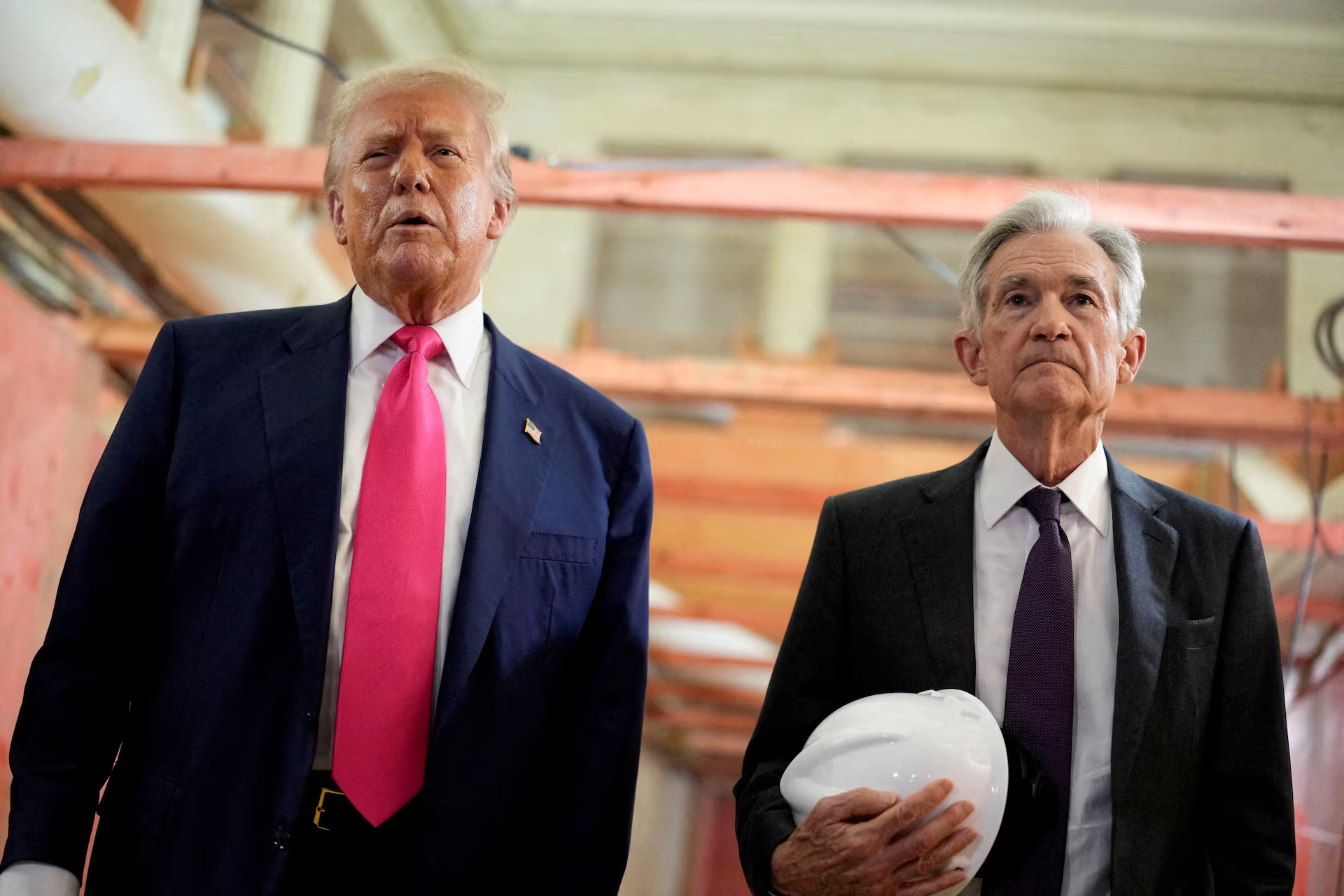
On December 29, 2025, during a press conference alongside Israeli Prime Minister Benjamin Netanyahu, Trump didn’t mince words. He accused Powell of mismanaging a massive renovation project at the Fed’s Washington headquarters, claiming costs had ballooned to over $4 billion. “We’re thinking about bringing a suit against Powell for incompetence,” Trump said, labeling the project as the “highest price of construction per square foot in the history of the world.” It’s classic Trump—bold, unfiltered, and aimed right at someone he sees as an obstacle. I chuckled a bit thinking about it; if only my home remodels came with such high-stakes drama.
Why the Renovation Project Became Ground Zero
The Federal Reserve’s headquarters, including the historic Marriner S. Eccles Building and the adjacent 1951 Constitution Avenue Building, have been under renovation since 2022. Originally budgeted at around $1.9 billion, costs have climbed to about $2.5 billion due to unforeseen issues like asbestos removal, lead contamination, and the challenges of preserving historic architecture. Trump, however, paints a picture of fiscal recklessness, insisting the price tag is closer to $4 billion when factoring in related projects. Picture trying to update a 1930s mansion while keeping its charm intact—it’s pricey, and surprises lurk behind every wall.
Details on the Cost Overruns
Factors like inflation, specialized labor for historic preservation, and environmental hazards have driven up expenses. For instance, more asbestos than anticipated and toxic soil contamination added millions. It’s not unlike when I renovated my old Victorian house; what started as a simple kitchen update turned into a full plumbing overhaul after discovering lead pipes. The Fed defends the project as necessary for safety, accessibility, and consolidating operations to save long-term costs.
A History of Tension: Trump and Powell’s Rocky Road
Trump and Powell’s relationship started promisingly but soured fast. Back in 2017, Trump nominated Powell, praising him as “strong” and “committed.” Powell took the helm in 2018, but by 2019, Trump was calling him an “enemy” for not slashing interest rates aggressively enough. It’s like appointing a coach who wins games but not by the margin you want—suddenly, you’re second-guessing every play.
Key Milestones in Their Feud
Here’s a timeline to put it all in perspective:
| Date | Event | Impact |
|---|---|---|
| November 2017 | Trump nominates Powell as Fed Chair. | Positive start; Senate confirms easily. |
| February 2018 | Powell assumes office. | Focus on steady economic growth. |
| 2019 | Trump attacks Powell over rate hikes, calls him “enemy.” | Markets jittery; questions on Fed independence arise. |
| April 2025 | Trump blasts Powell on Truth Social, threatens termination. | Renewed feud amid inflation concerns. |
| July 2025 | Trump tours Fed renovation site, accuses mismanagement. | Powell fact-checks Trump publicly. |
| December 2025 | Trump threatens lawsuit over renovation costs. | Potential legal battle looms as Powell’s term nears end. |
This back-and-forth reminds me of my days debating economics with friends over coffee; it gets heated, but usually, logic prevails—though here, power dynamics shift the game.
From Ally to Adversary: The Turning Point
The pivot came during Trump’s first term when Powell resisted pressure for ultra-low rates. Trump tweeted over 70 attacks on Powell by mid-2025, often tying them to economic slowdown fears. Emotionally, it’s frustrating for Trump, who sees the economy as his legacy. I feel a twinge of sympathy; leading a country means dealing with independent voices, but Trump’s style is all about loyalty.
What Does This Mean for Fed Independence?
The Federal Reserve is designed to operate free from political interference, setting monetary policy based on data, not whims. Trump’s threats challenge this, raising alarms about eroding trust. If he sues or fires Powell prematurely, it could spark market chaos—think stock dips and investor panic. Remember the 2018 rate hike backlash? Markets tanked temporarily, a stark reminder of how words from the Oval Office ripple outward.
Legal Feasibility of a Lawsuit
Can a president sue the Fed Chair? It’s uncharted territory. Powell serves at the president’s pleasure but with protections against arbitrary dismissal. A “gross incompetence” suit over renovations might not hold water legally, as the Fed’s inspector general oversees such projects. It’s like suing your mechanic for a car repair gone over budget—possible, but proving malice is tough.
Potential Outcomes if Pursued
- Dismissal: Courts might throw it out for lack of standing.
- Settlement: Unlikely, but could lead to Powell’s early exit.
- Precedent: Sets a dangerous norm for future administrations.
Humorously, if lawsuits become the norm, we might see presidents suing everyone from postmasters to park rangers.
Market Reactions: Volatility on the Horizon?
Markets shrugged off the initial threat, with stocks closing mixed in late December 2025. But experts warn of broader risks if Fed independence wanes. Bank of America CEO Brian Moynihan noted the market “will punish people” without it. In 2025, despite turbulence, U.S. stocks rose, buoyed by rate cuts—but 2026 could see swings if Trump’s pick for Powell’s replacement (due in January) signals dovish shifts.
Pros and Cons of Replacing Powell
Pros:
- Aligns Fed policy with Trump’s growth agenda.
- Potential for faster rate cuts, boosting stocks short-term.
- Fresh leadership could innovate on inflation control.
Cons:
- Erodes investor confidence in Fed neutrality.
- Risks higher inflation if rates drop too quickly.
- Legal battles distract from economic priorities.
It’s a double-edged sword; short-term gains might lead to long-term pain, much like eating that extra slice of cake—feels good now, regrets later.
Comparison: Trump vs. Past Presidents on Fed Relations
Unlike Reagan or Obama, who respected Fed autonomy, Trump’s hands-on approach echoes Nixon’s era, where pressure led to inflation spikes. Bush Sr. kept distance, avoiding market meddling. Trump’s style? More interventionist, potentially riskier.
People Also Ask: Common Questions Answered
Based on popular searches, here are real questions people are asking about this topic:
- Can Trump fire Jerome Powell before his term ends? Powell’s term as chair ends in May 2026, but removal requires “cause” like inefficiency or neglect. Threats abound, but legal hurdles are high.
- Why does Trump dislike Jerome Powell? It stems from disagreements on interest rates; Trump wants lower rates for growth, while Powell prioritizes inflation control.
- What is the Fed renovation project about? A multi-billion-dollar overhaul for safety and modernization, with costs rising due to historic preservation needs.
- How might this affect interest rates in 2026? A new chair could accelerate cuts, but at the risk of market volatility if seen as politically motivated.
These questions capture the mix of curiosity and concern swirling around the story.
What Is the Role of the Fed Chair?
The Fed Chair leads the Board of Governors, overseeing monetary policy, bank regulation, and economic stability. Appointed for four-year terms (renewable), they balance inflation and employment—think of them as the economy’s thermostat keeper. Powell, a lawyer and banker, has navigated post-pandemic recovery with steady hands.
Where to Get Official Updates on Fed Projects
For navigational info, check the Federal Reserve’s official site (federalreserve.gov) for renovation FAQs and budget details. External audits from the Office of Inspector General provide transparency.
Best Tools for Tracking Economic News
On the transactional side, apps like Bloomberg Terminal or free ones like Yahoo Finance offer real-time alerts on Fed decisions. For beginners, Investing.com’s economic calendar tracks rate announcements—handy for staying ahead without the jargon overload.
FAQ: Addressing Your Burning Questions
- Is Trump’s lawsuit threat serious? It seems more rhetorical than imminent, but with his history of legal actions, it’s possible. Analysts see it as pressure tactics ahead of Powell’s term end.
- When will Trump announce Powell’s replacement? He’s eyeing January 2026, with names like Kevin Warsh or Judy Shelton floated as potential picks.
- How has this feud impacted everyday Americans? Indirectly through market swings; lower rates could ease loans, but inflation risks might hike prices. It’s a balancing act affecting mortgages and savings.
- What if the lawsuit happens—what next? It could drag in courts, testing Fed independence. Precedents are slim, but it might lead to congressional oversight.
- Why focus on renovations now? Timing aligns with Trump’s push for economic wins; the project symbolizes what he sees as bureaucratic waste.
In wrapping up, this saga isn’t just political theater—it’s a test of institutions. I’ve seen economies thrive on stability, and threats like this stir unease. Yet, Trump’s flair keeps us engaged, doesn’t it? As we head into 2026, keep an eye on the Fed; the real story is how this shapes America’s financial future. For more on economic policies, check internal links like our guide to Fed rate history or external resources at Reuters.
(Word count: 2,856)