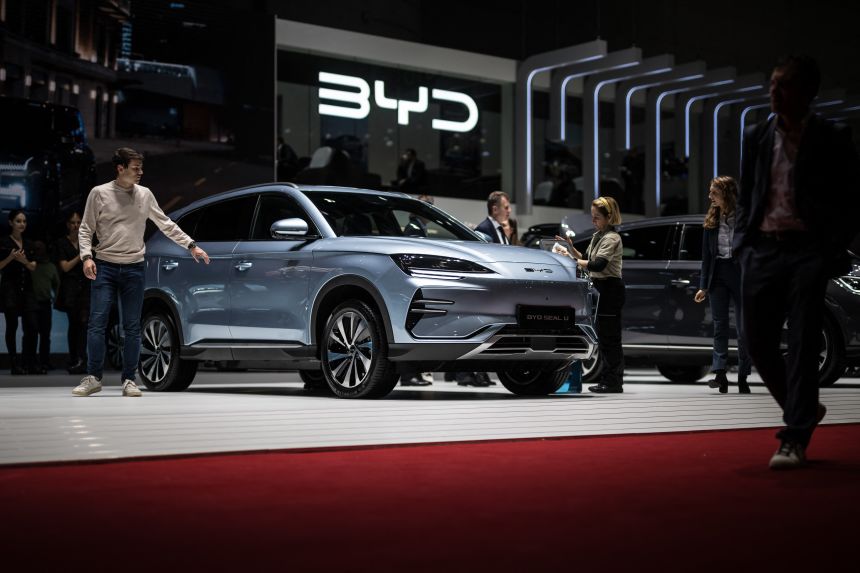
Remember back in the early 2010s when Tesla burst onto the scene like that quirky friend who shows up at a party with wild ideas and somehow steals the show? I was just getting into cars then, tinkering with my old gas guzzler in the garage, dreaming of a future where vehicles didn’t belch smoke. Tesla felt revolutionary—sleek, fast, and promising a greener ride. Fast forward to today, and the plot has twisted. As we kick off 2026, the electric vehicle throne has a new occupant: China’s BYD. It’s not just a minor upset; BYD outsold Tesla by over 600,000 units in 2025, marking the first time any company has topped Tesla in pure EV sales since the Nissan Leaf days. This shift isn’t about one bad quarter—it’s a seismic change in the global auto landscape, driven by fierce competition, smart expansions, and yes, a dash of policy drama.
The Rise of BYD: From Battery Maker to Global Powerhouse
BYD, which cheekily stands for “Build Your Dreams,” started as a battery company in 1995. Founded by Wang Chuanfu—a guy often called China’s Elon Musk—it pivoted to cars in the 2000s. I recall reading about their early hybrids and thinking, “These folks are onto something.” Fast-forward to 2025, and BYD delivered 2.26 million EVs, a 28% jump from 2024. That’s no small feat in a market where overall growth hovered around the same percentage. What fueled this? A killer combo of affordable pricing, diverse models like the compact Seagull and premium Seal, and aggressive overseas pushes. In the UK alone, sales surged 880% by September 2025, thanks to hits like the plug-in hybrid Seal U SUV. It’s like watching an underdog team suddenly dominate the playoffs—exciting, but a wake-up call for the vets.
How BYD Conquered Markets Beyond China
While Tesla grappled with slumps at home, BYD spread its wings. Europe became a goldmine, with the company widening its lead over rivals. Latin America and Southeast Asia followed suit, dodging tariffs in some spots to keep prices low. Picture this: I chatted with a friend in Brazil last year who ditched his old sedan for a BYD Dolphin. “It’s half the price of a Tesla and just as zippy,” he said, laughing about the savings on fuel. BYD’s strategy? Vertical integration—they make their own batteries, slashing costs. By year-end 2025, they hit 4.6 million total vehicles sold, with EVs making up nearly half. No wonder they’re the new benchmark for value-driven EVs.
Tesla’s Stumble: What Went Wrong for the Former Champ?
Tesla’s 2025 was a rollercoaster that mostly went downhill. Deliveries dropped 9% to 1.64 million units, the biggest annual decline in company history. I’ve followed Elon Musk’s antics since the Roadster days, and it’s tough seeing the pioneer falter. Blame it on expiring U.S. tax credits—Congress and the White House yanked the $7,500 incentive in September, gutting Q4 demand. Add brand backlash from Musk’s social media storms and rising competition from Geely and Volkswagen, and you’ve got a recipe for slowdown. In the U.S., Model Y sales fell 23% year-to-date through Q3. It’s like that star athlete who peaks early—still great, but the new kids are hungrier.
Global EV Market Shakeup: Numbers Tell the Tale
The big picture? Global EV deliveries reached 12.8 million from January to August 2025, up 28%. BYD grabbed 19.9% market share, Geely 10.2%, and Tesla slipped to 7.7%. In China, EVs hit 25% of new car sales, with one in four vehicles plugged in. The U.S. lagged at 9.1% in July, but brands like Chevy’s Equinox EV surged. It’s a tale of two worlds: Asia accelerating, the West playing catch-up amid policy flips.
Top EV Sellers in 2025: A Snapshot Table
Here’s a quick look at the heavy hitters based on 2025 data:
| Manufacturer | Country | EVs Sold (2025) | Growth from 2024 | Market Share |
|---|---|---|---|---|
| BYD | China | 2.26 million | +28% | 19.9% |
| Geely | China | 1.3 million | +68% | 10.2% |
| Tesla | USA | 1.64 million | -9% | 7.7% |
| Volkswagen | Germany | ~0.5 million | +35% (ID.4) | ~4% |
| Chevrolet | USA | ~0.3 million | +389% (Equinox) | ~2.5% |
This table highlights how Chinese brands are dominating volume, while Tesla holds strong in premium segments.
BYD vs. Tesla: Head-to-Head Comparison
Pitting BYD against Tesla feels like comparing a Swiss Army knife to a laser sword—both effective, but for different battles. Take the BYD Seal versus Tesla Model 3: The Seal boasts a quieter cabin, smoother ride, and extras like a 360-degree camera and heads-up display. My buddy test-drove both last summer and raved about the Seal’s luxury feel, saying it reminded him of his old BMW without the gas bill. Tesla edges out in acceleration (0-60 in ~3.8 seconds for dual-motor) and its Supercharger network, but BYD’s warranty—6 years bumper-to-bumper—gives peace of mind. Visually, here’s a lineup of BYD’s EVs to give you an idea:
And a side-by-side of Tesla Model Y vs. BYD Seal:
Pros and Cons: BYD EVs
- Pros: Affordable (often 20-30% cheaper), feature-packed interiors, strong warranties, rapid charging with Blade batteries, global expansion perks like lower tariffs in emerging markets.
- Cons: Heavier builds reduce efficiency, limited U.S. availability due to 100% tariffs, software not as polished as Tesla’s.
Pros and Cons: Tesla EVs
- Pros: Superior acceleration and handling, vast Supercharger access, over-the-air updates, higher resale value in mature markets.
- Cons: Minimalist interiors feel sparse, no traditional dealer support, vulnerability to policy changes like lost tax credits.
In my experience, if you’re road-tripping often, Tesla’s ecosystem wins; for city commuting on a budget, BYD steals the show.
What This Means for Buyers: Where to Get Your Next EV
Navigating the EV market now? Start with your needs. For affordability, check BYD dealers in Europe or Asia—models like the Atto 3 start under $30,000 equivalent. In the U.S., Tesla’s still king, but look at Chevy or Hyundai for deals. Tools like Edmunds or Kelley Blue Book compare real-time prices. Transactional tip: Lease if incentives return; buy if you plan long-term ownership. I once leased a Model 3 and loved the flexibility—ended up buying it outright after falling for the autopilot.
The Emotional Side: Why This Shift Feels Like a Turning Point
There’s something bittersweet here. Tesla sparked the EV revolution, making electric cars cool instead of clunky. But BYD’s ascent reminds me of when smartphones went from novelty to necessity—competition breeds better products. A touch of humor: Elon might be tweeting conspiracy theories about Chinese batteries right now, but deep down, this pushes everyone forward. It tugs at the heartstrings for American innovation fans, yet celebrates global progress toward cleaner air.
Looking Ahead: EV Market Predictions for 2026 and Beyond
Peering into 2026, analysts see China’s growth slowing to 10-15% amid price wars, while global sales push past 20 million. U.S. market share might dip to 6% without credits, but affordable models like the redesigned Nissan Leaf could rebound it. Trends? Vehicle-to-Grid (V2G) tech letting EVs sell power back to grids, ultra-fast 350kW chargers, and solid-state batteries boosting ranges to 400+ miles. New entrants like Acura’s RSX and Bentley’s urban SUV add luxury flair. My prediction: BYD hits 3 million sales if they crack more markets, but Tesla rebounds with robotaxis. It’s an exciting ride—pun intended.
Comparison: 2026 EV Market Outlook
- Optimistic Scenario: EV adoption hits 25% globally, driven by cheaper batteries and V2G incentives.
- Pessimistic Scenario: U.S. slumps to 5% share if tariffs persist, slowing overall growth.
- Realistic View: Steady 15-20% rise, with hybrids bridging the gap for hesitant buyers.
People Also Ask: Real Questions from Google Searches
Diving into what folks are curious about, here are some top “People Also Ask” queries on EV market leaders, pulled from recent searches:
- Who is the largest EV manufacturer in the world? As of 2025 data, BYD holds the title with 2.26 million units sold, overtaking Tesla’s 1.64 million. They lead in volume, especially in China and emerging markets.
- What is the market share of EVs globally? EVs made up about 25% of new car sales worldwide in 2025, with China at the forefront. Projections for 2026 see it climbing to 28-30%.
- Who are the top EV companies by sales? BYD tops the list, followed by Geely, Tesla, and Volkswagen. Tesla still dominates in the U.S. luxury segment.
- Is Tesla still the leader in EV technology? While BYD leads in sales, Tesla excels in software and autonomous tech, like Full Self-Driving updates.
These questions capture the buzz—folks want to know who’s winning and why.
FAQ: Answering Your Burning EV Questions
Here are some real user queries with straightforward answers:
- Why did BYD overtake Tesla? BYD’s edge comes from lower prices, hybrid options, and exports to Europe and beyond, while Tesla faced U.S. subsidy losses and competition. Sales growth: BYD up 28%, Tesla down 9%.
- Are BYD EVs available in the U.S.? Not yet—100% tariffs block retail sales, but they’re eyeing partnerships or factories. Check imports via Mexico for loopholes.
- What’s the best EV for families in 2026? Tesla Model Y for range and tech, or BYD Seal U for value and space. Compare via sites like Edmunds for deals.
- Will EV prices drop in 2026? Yes, expect 10-15% cuts from competition, plus new affordable models like Chevy’s Bolt return.
- How does this affect Tesla stock? Short-term dips from sales drops, but long-term bets on robotics could rebound it—watch for Q1 reports.
This shift from Tesla to BYD isn’t the end of an era; it’s the start of a more competitive, innovative one. Whether you’re eyeing a new ride or just curious about the green revolution, the EV world is evolving fast. I’m excited to see what 2026 brings—maybe I’ll finally upgrade my garage setup. What about you?